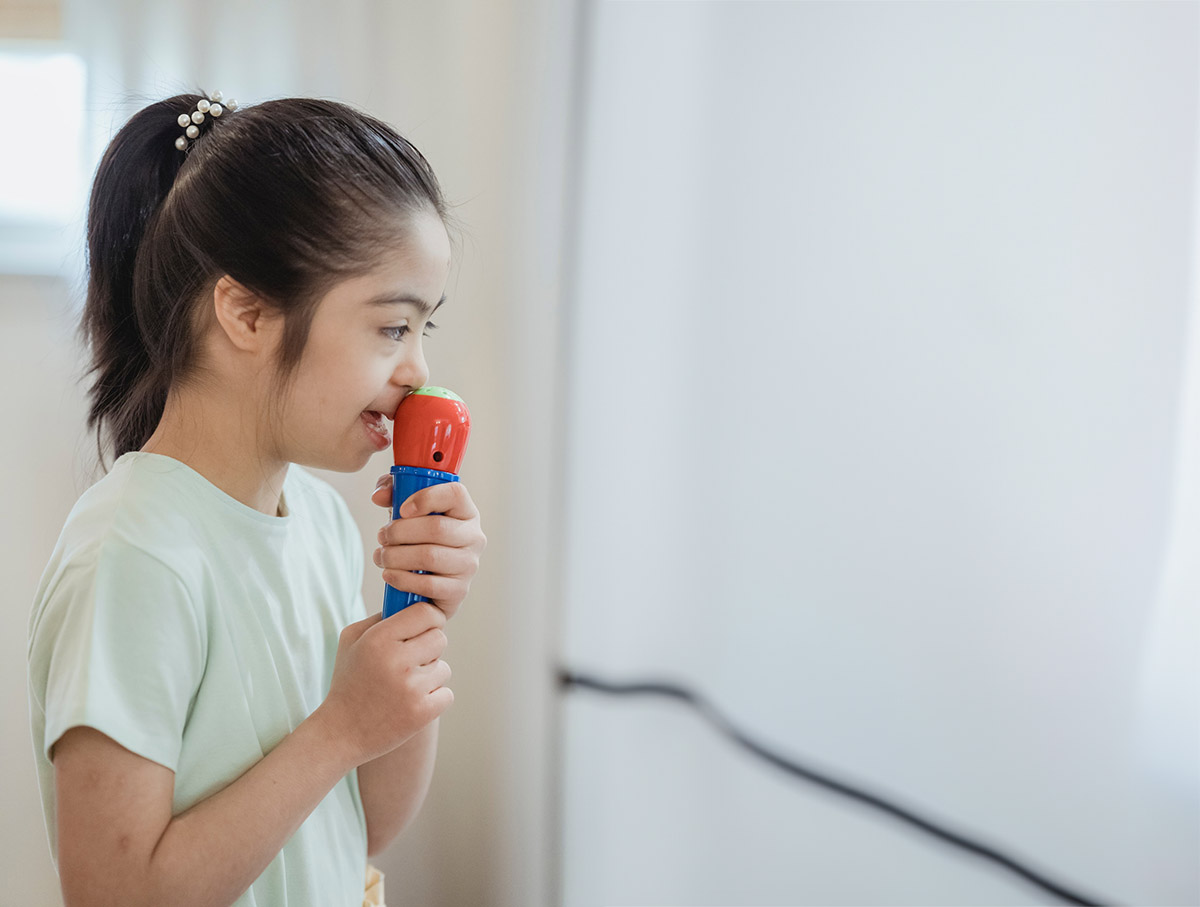
Autism and Down syndrome experts María Verde and Sonsoles Perpiñán speak at a Down Conference about the possible co-occurrence of both developmental conditions.
In it, María Verde, psychologist and research technician of Autism Spain, and Sonsoles Perpiñán, Coordinator of the National Early Intervention Network of DOWN SPAIN, intervened to talk about the possible joint appearance of both developmental conditions.
María Verde began the session by explaining what autism spectrum disorder (ASD) is and the prevalence of this condition in our country. “Autism is a neurobiological condition that affects the development and configuration of the nervous system, mainly in two distinct aspects. On the one hand, it affects communication and social interaction skills, and on the other, flexibility of behavior and thought,” she noted.
In addition, Verde pointed out that "although autism is more common in men, women can also be born with this condition, and therefore, they will be more vulnerable.".
Once the expert reviewed the characteristics of people with ASD, she indicated that the prevalence of co-occurring Down syndrome and autism is around 19-201. “It is estimated that between 161 and 421 people with Down syndrome have autism, but the figure most commonly used is 19-201. These data vary considerably depending on the studies and diagnostic criteria used to assess autism.”.
In addition, María Verde indicated signs that families of children with Down syndrome should pay attention to in order to identify a possible autism spectrum disorder, such as difficulty maintaining eye contact, using few gestures and words, or excessive attention to certain objects or activities, etc.
Once a family identifies some behavioral signs, the child should be professionally evaluated to confirm or rule out a diagnosis of autism with personal interviews, questionnaires, biomedical or neuroimaging tests.
“When a family of a child with Down syndrome receives a second diagnosis indicating that they also have autism, we professionals must take into account the history of that family: how they received the news of Down syndrome, their relationship with early intervention… These families have strengths: they are resilient families who tolerate adversity, they already have a support network and a broad knowledge of their child’s development.”.
According to Perpiñán, from that moment of diagnosis it is essential to "consider the needs of each family, offer them accompaniment and emotional support, eliminate feelings of guilt that are often present, reduce their uncertainty and above all, show the child beyond autism or Down syndrome.".
 English
  Español de México